How-to / Tutorials
March 30, 2026
March 30, 2026
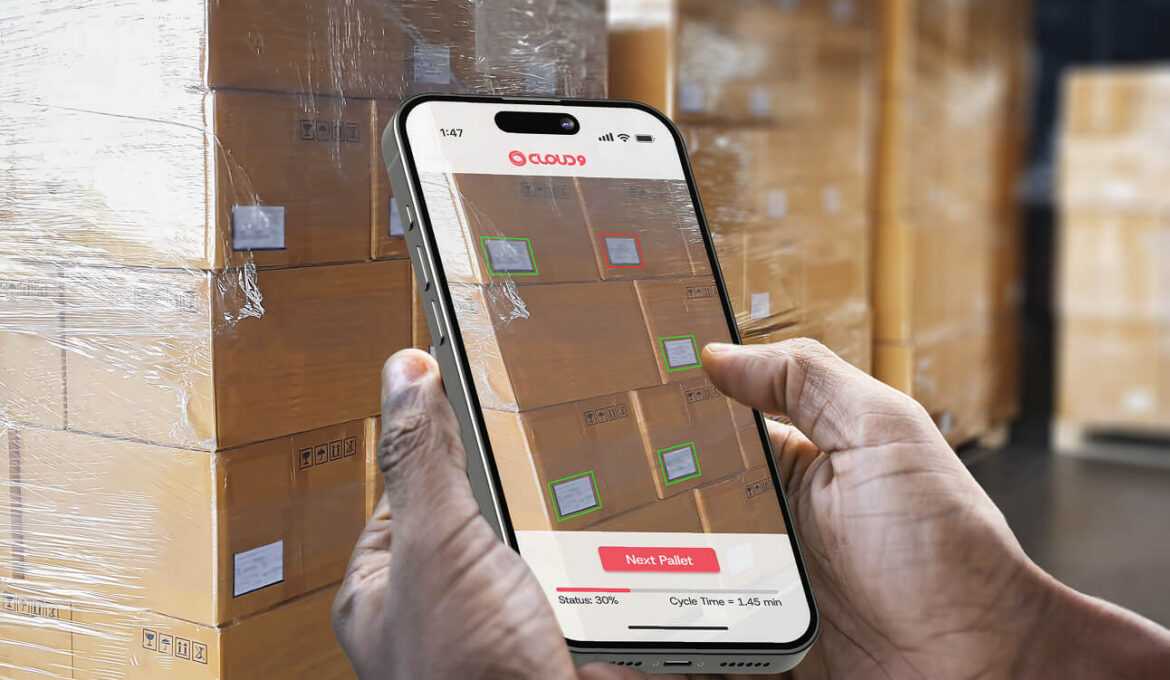
A Two‑Step Engineering Approach for Vision AI Deployment
Implementing a vision-based scanning system in supply chain settings is often hindered or fails because two distinct engineering problems are attempted concurrently: (1) designing and assembling fixed computer vision hardware (physical cameras, lenses, networking, power supplies, computers, controllers, etc.) and proving the software layer can actually read and interpret images in realistic operational conditions. Cloud 9’s two‑step approach flips the usual sequence, validating software efficacy first using lightweight tools, so teams can prove value fast, adapt for high efficacy, minimize risk, and build stakeholder confidence before major infrastructure investment in money and labor.
Step 1 – Lightweight piloting with iPhone image capture
Objective: Validate that the vision platform can meet your accuracy and throughput requirements before any physical install.
Method:
Benefits:
Step 2 – Fixed cameras and systems integration (after software validation)
Objective: With proven software performance, confidently finalize and deploy fixed or mobile cameras and integrate with your systems.
Method:
Why this approach works
Cloud 9 moves faster than larger vendors by prioritizing early software validation and enabling quick configuration and optimization. Our platform goes beyond simple barcode reads, using text recognition and intelligent image interpretation to handle cases where traditional scanning fails. A small dataset of sample images, collected by easy-to-use, easy-to-upload tools, is enough to train and prove the models, enabling pilots that don’t disrupt operations or require heavy IT involvement.
Prove the software first, then design and add the final hardware configuration. Cloud 9’s two‑step method reduces deployment time, minimizes risk, and secures stakeholder confidence so you can scale visual AI in your supply chain with certainty. Contact Cloud 9 to arrange a lightweight iPhone‑based pilot and see results before you commit to hardware spend, installations and system integrations.